
Nandan Nilekani and his wife Rohini are trying to improve education across India.

The military knows very little about the world of journalism and has no plan in place to learn more, says Ajai Shukla
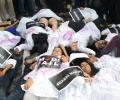
'Human rights violations are there in rural areas and in cities. In rural areas it is crude and in the open. In urban areas it is well hidden.' 'Awareness has grown several fold. India has 160 national and state human rights institutions. No other country in the world has this.' 'Unfortunately the right to association, right to assembly, freedom of expression, right to protest and discuss are all being curtailed systematically one by one.'

While China is bigger and feels mightier at the moment, Beijing's rulers would be well advised not to be tempted to provoke India, for that would only trigger a chain reaction around the world that would not serve anyone's interests, says Sanjaya Baru.

'An America at war with itself, groaning under a mounting debt, with woolly-headed economic policies of a neophyte president who is more feared and suspected among the comity of nations does not augur well for the world.' 'It would be well justified in asking,' says Shreekant Sambrani, '"Is this how you expect to make America great again, Mr President?"'

When I met him last year for his 75th birthday, he seemed frail. There was a sense of urgency. I will miss Stephen. His passing fills me with sadness.

Scientists at the India Meteorological Department warn that not only has India turned hotter in the last two decades, but that heat waves are projected to become more intense, have longer durations and greater frequency, thereby resulting in more deaths.

The number of people killed in acts of terror reached a record high last year, with almost four in five of these deaths occurring in just five countries, new research shows.


Since many of Modi's urban policies were initiated in Ahmedabad, the city may act as a template to examine what can be expected in a country that is witnessing the biggest migration from rural to urban areas in the world

The Pampore attack 'has the stamp of LeT written all over it.'
'They are exactly like the so-called fidayeen of the 1999-2003 phase, when J&K witnessed a surge in suicide attacks on various important garrisons,' says Lieutenant General Syed Ata Hasnain (retd), who served as the General Officer Commanding 15 Corps in Kashmir.

Purvi Patel is the first woman in America to be sentenced to prison for foeticide. Chaya Babu/Rediff.com reports on the verdict and the ripples of shock and fear it set off.

'It has taken bombings in Beirut, bombing of a Russian airliner and now terror attacks in Paris for people to realise that we are not going to achieve our objectives of destroying ISIS if we drive in second gear. We need to get into top gear.'

'If the money we spend on importing pulses reach our farmers, there won't be any suicides'
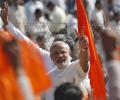
'A change of government will bring about a lot of changes because everything is frozen for the last two years. So, the frozen energies of India will be released.' Swadeshi Jagran Manch convenor Swaminathan Gurumurthy discusses the Modi phenomenon with Shobha Warrier/Rediff.com

The proposed changes to the child labour law to allow children and adolescents to work for their families would be most retrograde and regressive, say Shinzani Jain and Paranjoy Guha Thakurta.

Indian billionaires do not believe in sitting on their wealth.
Chief economic advisor Arvind Subramanian discusses the Budget, goods and services tax, Centre-state relationship and larger issues facing the economy
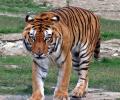
'We are rushing to 'develop' without carefully valuing natural areas.' 'With careful land use planning and scientific zonation at least 5 to 10 per cent of the country's land can be secured for tigers and other such species, and another 5 to 15 per cent kept under low-impact uses to support biodiversity that can coexist with human uses.'
